Category: Manufacturing

  • The Secret to Successful Manufacturing: Focus on What You Are Good At

    The Secret to Successful Manufacturing: Focus on What You Are Good At

    If it’s one thing I’ve learned in my many years of manufacturing, it is impossible to be everything to everyone. You must focus on the “craft” of machining, rather than the industry you are working in.

    What is Corma Industries’ secret to being such a successful machine jobbing shop in Calgary, AB, despite the current recession? Knowing what we are the best at and focusing strictly on that is the key. Here’s why.

    The process of machining is more than just operating a machine, pushing buttons and spitting out parts. For Corma, it is all about relationships. The machine jobbing shop’s role is to fully understand the machining process.  It begins with listening to the client’s needs and discussing the job at hand, while liaising with vendors to get the right material on time at the right price.

    It also means working with machine and tooling suppliers to make sure we have the right equipment and tools for the correct application. It is crucial to concentrate on purchasing specialized tooling and fixtures that will streamline our business and improve processes. The customer’s job is to focus on engineering and obtaining a top-quality product in order to be the best in their industry. They are the experts in what they do after all.

    These are all critical elements to successful machining. But what sets Corma Industries apart from other competing machine shops is becoming an expert in a specific process of machining. It is the best way to satisfy our customers’ expectations. They can be assured they are receiving focused value in the top-quality produced parts.
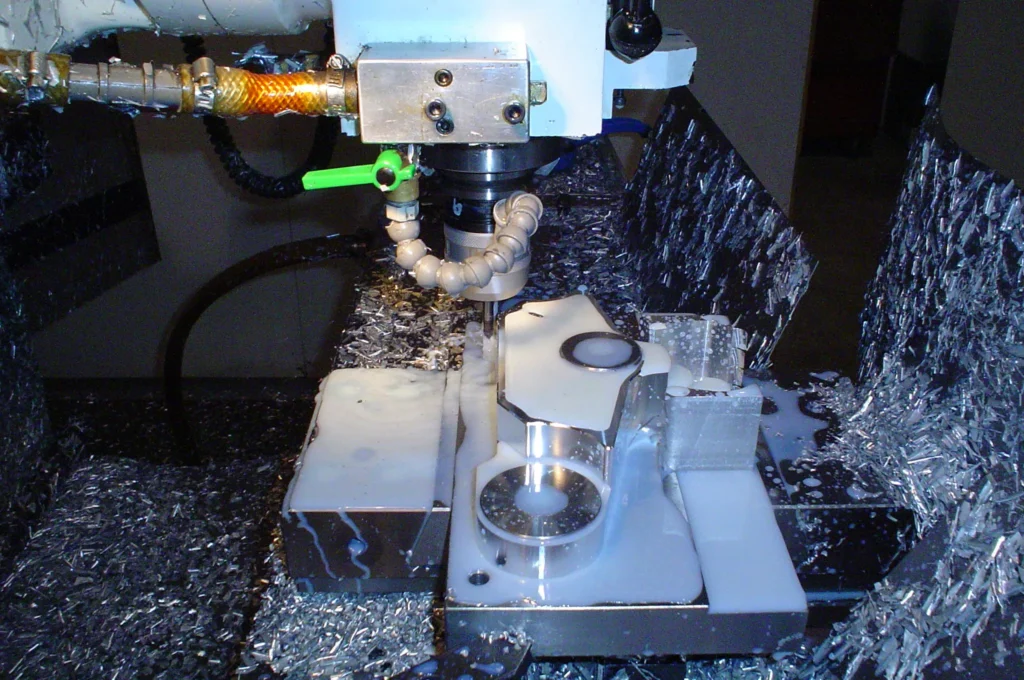
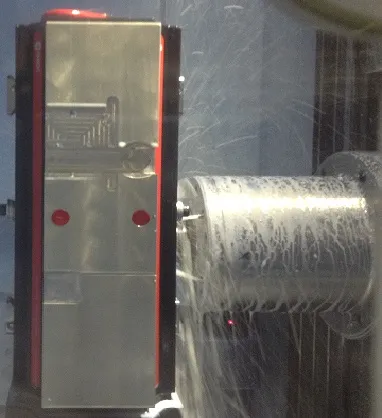
    At Corma Industries, we specialize in milling. Milling, of course, is a machining process where a rotary cutter removes material that remains stationary in a clamped vice. We have established ourselves as experts in milling operations with a fast setup and turnaround times. We specialize in manufacturing intricate items like housings, fixtures, bracketing, manifolds, and more. Our state-of-the-art vertical and horizontal milling machines are tailor-designed to produce high-quality parts, whether it is a one-off custom prototype or a medium-volume production run. New and existing customers know that we are the experts in milling and seek us out because of our reputation.

    Corma is perfectly able to handle our customer’s turning, welding, and grinding needs. But because we believe in the motto “you can’t be everything to everyone,” we know that developing transparent alliances with other successful, like-minded, and expert machine shops that specialize in other machining processes will ensure that our customers get the top-quality service for all their application needs. For example, Corma has excellent and transparent relationships with machine shops specializing in welding, waterjetting, honing, turning, EDM wiring, electroplating, anodizing, etc. As a jobbing shop, our role is to cater to our clients by facilitating the other machining-related operations, making the customer’s job easier, quicker, and less stressful.

    The benefits of being an expert in a specific area of machining are obvious to clients. Machine shops are more able to become very organized in what they do. For example, they can purchase the best machines and equipment for the right application. They can organize their shop floor to maximize efficiency, knowing ahead of time what types of cutters, inserts, and end mills to buy. The routing steps used can be streamlined to optimize efficiency in order to keep costs and turnaround times shorter. In the end, specialized machine shops with a key focus on one or more machining processes will produce higher-quality parts, manufactured by top experts in the field.

    While Alberta is still in the midst of an economic slump, and even though the price of oil has risen to the $50 price point in recent months, machine jobbing shops should be diversified in other markets (solar and alternative energies, automotive, mining, retail, etc.). But specializing in one or more machining focus(es) with strong alliances with other expert machine shops at the top of their specialized area has been the key to our success during the recession.
  • Is Manufacturing in Alberta Really Dying?

    Is Manufacturing in Alberta Really Dying?

    I’d been a journeyman machinist for over 25 years, even before I purchased Corma Industries six years ago. I’ve noticed a disturbing trend over the last decade. It seems to me that outside of oil & gas work, manufacturing in Alberta is floundering.

    As long as the oil & gas sector was booming, the manufacturing industry was flourishing, but as soon as the biggest resource in Alberta dried up, so did manufacturing. And yet, manufacturing is at the heart of almost every industry, in some way. Whether it be the automotive industry, infrastructure, alternative energies, mining, construction, avionics, aerospace, medical instruments, retail, agriculture, or food and beverage, manufacturing has its hand in every industry.

    So why aren’t the federal and the Alberta provincial governments supporting and promoting the heck out of the manufacturing sector? Canada needs goods and services to grow the gross domestic product. But Canada has given away its manufacturing to the global market, places like China, India, and Vietnam. Why are we giving our valuable resource to foreign countries? Because it’s more cost-effective?

    Hold on, not necessarily. Let’s think for a moment about how important manufacturing really is to Canada’s economy. It supports economic diversity, investment, and innovation. It creates jobs, provides value-added products that can be used domestically and/or exported to other markets, contributes to the federal and provincial GDP, pays taxes, and most importantly, maintains and supports our Canadian way of life. Why would we want to give that up?

    Is importing manufactured goods and services really beneficial? When you consider import tariffs, transportation costs, unpredictable and uncontrolled quality standards, rising labour costs in China, the need Canadian customers have for shorter lead times, etc., bringing manufacturing closer to home starts to make sense.

    Now, Alberta manufacturers do face some major challenges. It has been very difficult in recent years to attract and retain skilled and engaged labor able to handle fast turnaround times. In addition to labour shortages, a substantial increase in foreign competition has forced Canadian manufacturers to drop their prices to the point that they can no longer compete with foreign manufacturers.

    So what do we do to bring manufacturing back to Alberta? Well, the Canadian Manufacturers and Exporters published a report entitled “Manufacturing Alberta’s Future” (http://www.cme-mec.ca/download.php?file=hujy5qec.pdf) which proposes to double Alberta’s manufacturing output by 2020. This report lists recommendations to revitalize the sector. The entire manufacturing industry in Alberta must work together to make these recommendations a reality.

    According to the report, revitalization starts with sector diversification, innovation, and investment. First, we need to promote local manufacturing to a larger variety of industries. There is a huge need for producing goods and services in Alberta beyond the traditional energy industry. Instead of just focusing on oil & gas, we need to create opportunities to support other sectors.

    Secondly, we need to get the provincial and federal governments on board to make manufacturing in Alberta a priority. In her television address on April 7, 2016, Premier Rachel Notley alluded to investing in infrastructure and diversifying the economy but was short on specifics. She never once mentioned supporting and promoting manufacturing in Alberta through investments from the private sector and the government. We need to educate the government and the private sector about how important the sector is to Alberta’s economy.

    Thirdly, the manufacturing sector itself will have to adapt to change. We may need to re-evaluate and revise our training programs to attract and retain educated employees adept at keeping pace with technological change. But we need to think outside the box to adapt to labour challenges. For example, if finding reasonably priced, skilled, and motivated labour is an issue, then we will have to invest in automation. This is scary, particularly for small manufacturing shops, because of the upfront costs of purchasing expensive machinery, but the cost savings can be remarkable in the long run, especially with the technological advances that allow machines to now run unmanned. Believe me, other provinces have already invested heavily in automation.

    Not only does Alberta need to develop a reputation as a leader in the manufacturing industry, but we must also look for new markets and export opportunities as well. This will take a collaboration between governments at all levels, decision-makers in the private sector, educational institutions, and manufacturers.

    The ability to re-energize the manufacturing industry and bring back this province’s wealth is possible and within our reach, but it will be up to producers to lead the way and bring about opportunities in Alberta.

  • Corma Saves the Day on New Year’s Eve

    Corma Saves the Day on New Year’s Eve

    A customer came to us with an urgent job.

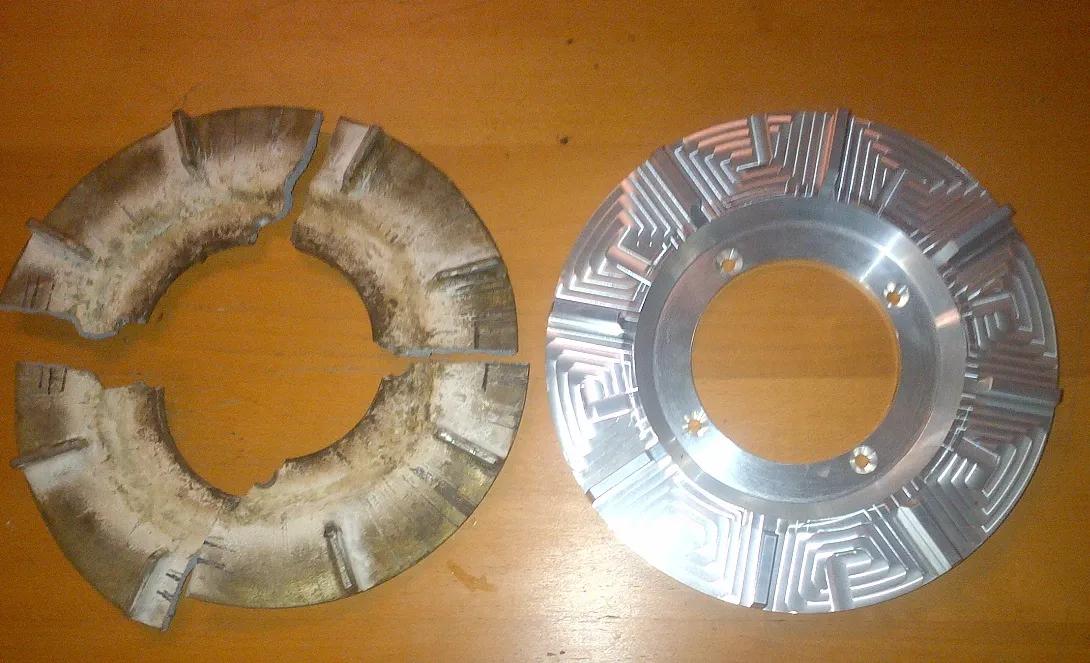
    A cast impeller on a blower broke and their plant suddenly went down. They needed a new impeller made fast. So without any drawings to use as a guide, we successfully manufactured a new impeller, using extruded aluminum, and got their plant back up online.

    All of this done on New Year’s Eve.